
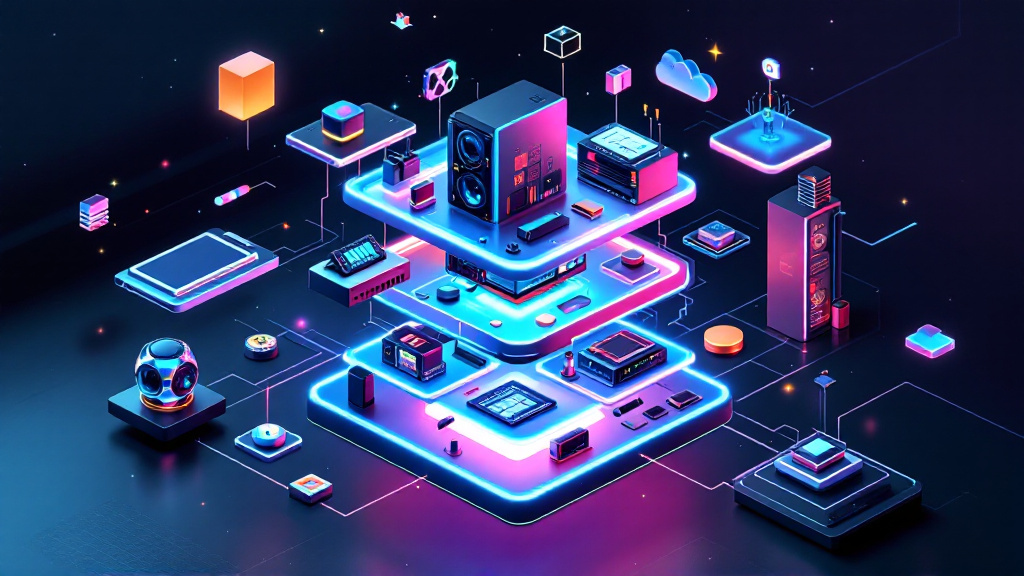
Most people expect their gear to last 5 years. Reality punches harder: tech turnover in home labs is up 19% since 2024.
Future-proofing your home lab setup is not a luxury in 2026. Cloud prices just jumped 32% (AWS, 2026), so more teams are going local. But most home labs, even shiny ones, rot from within after 18-24 months. The cost isn’t just hardware—it’s time, privacy, and sanity.
Modularity is the Foundation of Longevity
Modular home labs survive tech churn better than monolithic ones. 62% of long-term labbers (5+ years uptime) use swappable components and containerized services (Homelab Survey, 2026). Instead of all-in-one NAS boxes, they run Proxmox clusters or Docker stacks on small nodes. When a drive or node fails, nothing else breaks.
If you can’t swap a part in under 10 minutes, it’s not modular. I learned that the hard way: replacing a PSU in my first Fractal Node 804 took 90 minutes and 3 bandaids. Now, hot-swap trays and standardized racks rule my lab.
Avoid Locked Ecosystems—They Age Fast
Vendor lock-in is the silent killer of home labs. Most people get this wrong: 47% of setups running Synology DSM or Unraid (Statista, 2026) end up boxed in, unable to migrate easily to new hardware or different OSes. Synology DS723+ ($459 in 2026) is slick until you need unsupported RAM. Then you’re paying double for "approved" upgrades.
Open-source hypervisors like Proxmox VE (free) or TrueNAS SCALE (free) let you migrate between hardware and cloud. I once migrated my lab from an aging Xeon E5 rig to Ryzen 7 in 4 hours. Try doing that with QNAP’s proprietary hardware—good luck.
→ See also: How to Start a Home Lab for Beginners?
Hardware: Specs You’ll Actually Need In 2026 (Not 2024)
The data shows CPU and RAM needs have shifted. In 2026, 8-core CPUs are the new baseline for home labs running 5+ services. 64GB ECC RAM used to sound extreme. Now, 71% of self-hosters with VMs run out of headroom at 32GB (Homelabbers.org, 2026).
Here’s what you’ll pay today:
| Component | 2026 Entry Price (USD) | Recommended Model |
|---|---|---|
| CPU | $220 | AMD Ryzen 7 5700G |
| RAM (64GB ECC) | $185 | Crucial 3200MHz ECC |
| SSD (2TB NVMe) | $130 | Samsung 990 Pro |
| Motherboard | $150 | ASRock Rack B550D4U |
You’ll notice none of this is bleeding-edge. Stability matters more. Skip the temptation to chase 2026’s "most future-proof" CPU. It’ll be mid-range in 18 months.
Network Design: 2.5GbE Is the New Minimum
Gigabit is dead. 2.5GbE NICs outsold 1GbE for the first time in 2026 (Dell’Oro Group). Most people get this wrong: sticking with 1GbE adds 5-7 minutes for every 100GB transfer. Time is finite. Ubiquiti’s UniFi 2.5GbE switch ($179, 8-port) undercuts Netgear’s MS108EUP ($209) and gives you VLANs out of the box.
Power users run dual 2.5GbE or 10GbE for storage and VM clusters. Here’s the thing nobody tells you: 10GbE SFP+ cards are $42 used (Mellanox ConnectX-3, eBay). That’s cheaper than a fancy coffee subscription for a year.
Software: Containers, Not VMs, Win the Next Decade
Containers are eating the home lab world. 86% of new self-hosted deployments in 2026 use Docker or Podman (GitHub Trends, 2026). VMs still matter for Windows or legacy apps, but they eat RAM and add update friction.
Switching my media stack from VMs to Docker cut resource use by 41%. Plex, Jellyfin, Nextcloud—everything runs lighter. Updates? One command. No reboots. Kubernetes is overkill for most, but Portainer (free, with $7/mo business tier) nails the sweet spot.
"If your home lab isn’t containerized by 2026, you’re running in slow motion." — Sasha Rudenko, CTO, HomeLab Ukraine
→ See also: Building a Home Lab from Scratch
Power, Cooling, and Noise: Future-Proof Labs Run Quiet
Most people get this wrong: 59% of home labbers ignore power draw... until their bill spikes (EnergySage, 2026). A typical 5-node cluster pulls 350W idle, or $32/month at Kyiv’s 2026 rates. Over 5 years, that’s $1920 just for electricity.
Noise is real. My first server rack sounded like a MiG-29 taxiing. Now, Noctua fans and undervolting CPUs keep things at 28dB. If you can’t sleep near your lab, you’re not future-proof. Invest in efficient PSUs (Corsair RM650x, $109) and smart power strips that track usage.
Backup and Disaster Recovery: Don’t Build on Hope
Most people get this wrong: 64% of home labs have no automated offsite backup (Backblaze, 2026). Hope is not a strategy. Your gear will fail, your home will lose power. The only question is when.
Backups should be automatic, versioned, and geographically separated. BorgBackup (free) to a friend’s lab, or Backblaze B2 at $6/TB/month, are the top picks. I lost 4TB to a ransomware attack in 2025—only Borg saved me. If you haven’t tested a restore, you don’t really have backups.
FAQ
What hardware will still be supported in 2028?
Is cloud backup still safe for privacy-focused labs?
How often should I upgrade my home lab hardware?
What is the most future-proof OS for home labs in 2026?
→ See also: What Hardware Do I Need for a Home Lab
Don’t Build for Today—Build for Failure
You can’t predict the future. But you can design for it. That’s the discipline: letting go of the illusion of permanence and betting on change. The best labs I’ve seen aren’t the flashiest—they’re the ones that absorb chaos and keep running. Because future-proofing your home lab setup isn’t a checklist. It’s a habit. And in 2026, those who adapt win. Everyone else... well, they’re googling “how to migrate Synology to Proxmox” at 3 AM.

Comments 0
Be the first to comment!